


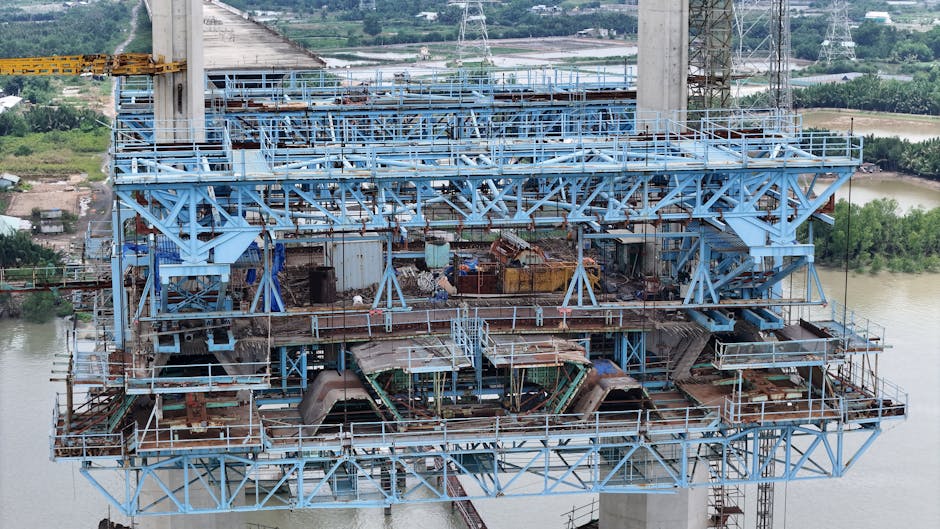

Project Progress and Water Level Challenges
The bridge and road construction project connecting Ia Chim tourism commune to Ya Ly commune in Quảng Ngãi province has faced significant delays despite the completion of key infrastructure. With a total investment of nearly 170 billion VND, the project was set to begin in September 2022 and was expected to be completed by the end of 2025. However, as of now, the work remains unfinished due to the inability to proceed with critical components, primarily caused by the rising water levels in the Ia Ly reservoir.
The road sections leading to the bridge from Ya Ly commune are largely completed, but the five main bridge piers (T2 to T6) remain unconstructed. This is due to the fact that the actual water level in the reservoir has consistently exceeded the original design parameters. Initially, the project was planned to operate under a water level of approximately 494 meters, which aligns with the dry season conditions. However, the prolonged delays in land clearance have disrupted the construction schedule, making it impossible to adhere to the original timeline.
The land clearance process for the first phase was completed only by the end of March 2023, which is 200 days behind schedule. The second phase was finalized in February 2024, nearly 500 days late. By the time the land was fully cleared, the actual water levels had already changed significantly. The completion of the Ia Ly hydropower plant in late 2024 further exacerbated the issue, as the water regulation in the reservoir became more dynamic. This has led to the current water levels being 6–12 meters higher than the original design, with some instances reaching up to 17 meters above the base level of the bridge piers.
Design Adjustments and Project Delays
The project’s delays have prompted the investor to repeatedly request design modifications to adapt to the current conditions. Originally managed by the Kon Tum Department of Construction, the project was transferred to the Quảng Ngãi Provincial Department of Construction and Investment after the province’s administrative restructuring. Since September 2025, the investor has proposed technical adjustments, including a revised timeline for completion, extending the project to the end of 2027.
Two primary design alternatives have been proposed. The first option maintains the original seven-span bridge design with a total length of 339 meters but shifts the pier foundations from low-level to high-level platforms to accommodate the rising water levels. The second option involves expanding the bridge to eight spans while keeping the same total length of 339 meters, with all main piers using high-level foundations. Both proposals aim to address the challenges posed by the increased water levels, but they have yet to receive approval from the relevant authorities.
The investor’s representative emphasized that without these adjustments, the project cannot proceed under the current conditions. They noted that the original design was no longer viable, as the water levels have exceeded the planned parameters. However, despite multiple requests for design changes, the project remains stalled. The investor has stated that the existing design is too risky and impractical, and that the contractor is unable to proceed without modifications. This has left the project in a deadlock, with no clear resolution in sight.
Community Impact and Current Status
The prolonged delays have not only affected the project’s progress but also raised concerns among the local community. While the bridge and road infrastructure is critical for connecting Ia Chim and Ya Ly, the lack of access roads and incomplete construction has hindered daily activities for residents. In some areas, the absence of proper road connections has led to increased travel times and logistical challenges, particularly for those reliant on the bridge for transportation.
The situation has also drawn attention to broader issues in infrastructure development in the region. Similar delays have been reported for other bridges in Da Nang, where construction has been slowed by the lack of access roads and fluctuating environmental conditions. These projects highlight the complexities of large-scale infrastructure work in areas prone to natural challenges, such as rising water levels and unpredictable weather patterns. The local authorities have faced pressure to expedite the process, but the technical and financial constraints have limited their ability to act swiftly.
Despite the investor’s efforts to secure approvals for design changes, the project remains in a state of limbo. The contractor has been forced to halt work for safety reasons, and the lack of progress has left the community waiting for a resolution. The situation underscores the delicate balance between ambitious infrastructure projects and the need to adapt to real-time environmental changes. Without a clear path forward, the bridge’s completion—and its benefits to the region
Conclusion
The prolonged delays have not only affected the project’s progress but also raised concerns among the local community. While the bridge and road infrastructure is critical for connecting Ia Chim and Ya Ly, the lack of access roads and incomplete construction has hindered daily activities for residents. In some areas, the absence of proper road connections has led to increased travel times and logistical challenges, particularly for those reliant on the bridge for transportation.
The situation has also drawn attention to broader issues in infrastructure development in the region. Similar delays have been reported for other bridges in Da Nang, where construction has been slowed by the lack of access roads and fluctuating environmental conditions. These projects highlight the complexities of large-scale infrastructure work in areas prone to natural challenges, such as rising water levels and unpredictable weather patterns. The local authorities have faced pressure to expedite the process, but the technical and financial constraints have limited their ability to act swiftly.
Despite the investor’s efforts to secure approvals for design changes, the project remains in a state of limbo. The contractor has been forced to halt work for safety reasons, and the lack of progress has left the community waiting for a resolution. The situation underscores the delicate balance between ambitious infrastructure projects and the need to adapt to real-time environmental changes. Without a clear path forward, the bridge’s completion—and its benefits to the region
Related story: Michiko Kato Embarks on a New Chapter as Toyota’s First Female CEO of a Subsidiary and CIO of Woven Capital